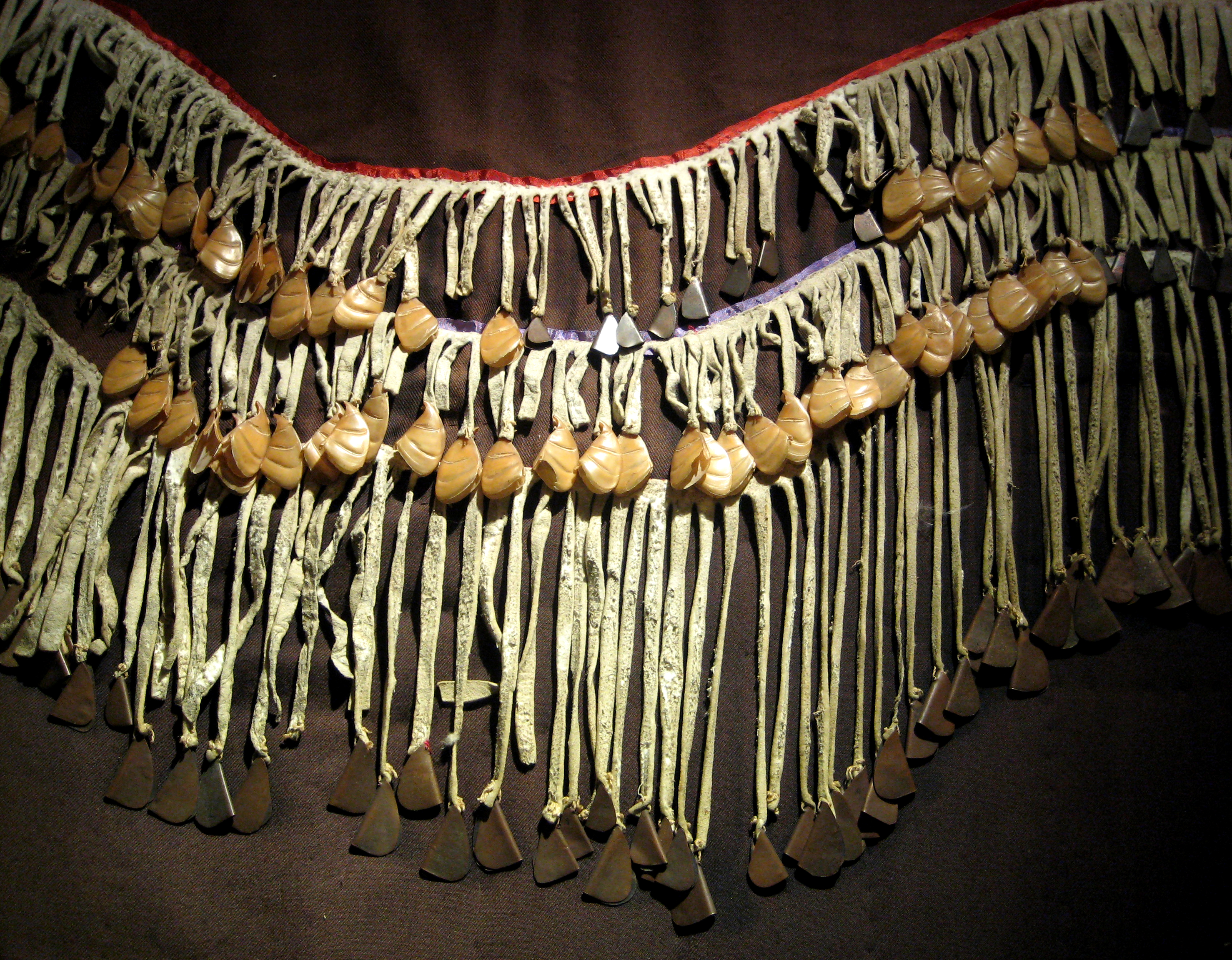
The Métis Nation — the distinct people that emerged from the relationships between European fur traders and First Nations women primarily in the Great Lakes and Prairie regions from the late seventeenth century onward — developed a cultural identity that drew from both parent traditions while producing forms that belonged to neither exclusively. Among the most visible of these forms is floral beadwork: a distinctive decorative tradition that covered clothing, moccasins, bags, and horse tack with stylized floral and leaf patterns worked in glass seed beads.
Origins of the Floral Pattern
The floral beadwork associated with Métis artisans in historical records does not derive directly from a single Indigenous tradition. Algonquian and Anishinaabe floral embroidery, worked in dyed porcupine quills before the availability of European glass beads, provided one formal source. French-Canadian decorative needlework and convent embroidery traditions, transmitted through mission schools and domestic instruction, contributed compositional conventions around symmetry and the organization of botanical motifs.
Early Jesuit mission schools in the Great Lakes region taught embroidery techniques to Indigenous and mixed-ancestry women, and the resulting synthesis — applied first to birchbark containers and hide garments, and later to trade cloth and European-style clothing — produced what became recognizable as a distinct Métis visual vocabulary. European traders and Hudson's Bay Company records from the late eighteenth and early nineteenth centuries document Métis beadwork as a traded commodity, not merely a domestic product.
The Ceinture Fléchée
The woven finger-woven sash — ceinture fléchée, or "arrow sash" — is among the most documented symbols of Métis material culture. Produced through a technique of finger-weaving worsted wool yarn into chevron and arrow patterns, these sashes were worn by male Métis hunters and traders as functional garments — holding capote coats closed, carrying tools, and providing warmth — as well as markers of identity in the mixed-company environment of the fur trade.
The Assumption sash, a style associated with production around Assumption, Quebec, and later produced by Métis weavers in the Red River Settlement, features a complex structure requiring a minimum of twelve to twenty-four hours of sustained work. The techniques were transmitted between generations through direct apprenticeship. By the mid-nineteenth century, commercial production of machine-woven approximations had begun to displace handmade examples in the trade economy, a pattern common across Indigenous craft traditions as industrial manufacturing expanded in Canada.
"The sash told you who a man was without him saying a word. The colour, the pattern, the width — all of it meant something to anyone who knew how to read it."
Red River and the Formation of a Métis Homeland
The Red River Settlement, centred near present-day Winnipeg, Manitoba, became the demographic and cultural core of the Métis Nation during the first half of the nineteenth century. By the 1820s, the settlement contained several thousand Métis residents alongside smaller European and First Nations communities, and had developed distinct economic, legal, and social institutions organized around the buffalo hunt, the Red River cart trade network, and a system of communal governance.
The Red River cart — a two-wheeled wooden vehicle constructed entirely without metal, using wooden pegs and rawhide lashings — became both the practical infrastructure of the Métis economy and an emblem of Métis mobility. Caravans of several hundred carts, whose unoiled wooden axles produced a sound audible at considerable distance, transported pemmican, furs, and trade goods across the northern plains. The logistics of organizing and executing these expeditions — which could involve hundreds of hunters, women, children, and livestock moving across hundreds of kilometres — required sophisticated collective management.

Louis Riel and the Political Formation
The political events of 1869–70 and 1885 — in which Métis communities in the Red River and later the North-West Territories organized armed resistance to Canadian federal annexation of their territories — produced the figures most prominently associated with Métis political identity in Canadian historical memory. Louis Riel, elected president of a provisional government at Red River and later executed following the defeat of the 1885 resistance at Batoche, Saskatchewan, has been the subject of over a century of contested interpretation.
The Manitoba Act of 1870, which brought Manitoba into Confederation partly in response to the Red River provisional government's demands, included specific provisions for Métis land rights — provisions whose implementation was subsequently delayed, modified, and in many cases never executed. The resulting dispossession of Métis landholders in Manitoba, documented in detail in the 1986 Oulette Report and subsequent government reviews, remains the subject of active litigation and negotiation. The Crown-Indigenous Relations Canada website publishes current government positions on outstanding Métis rights claims.
Contemporary Métis Recognition
Section 35 of the Constitution Act, 1982 included Métis within its recognition of Aboriginal peoples, but the legal definition of who qualifies as Métis for purposes of constitutional rights remained unresolved until the Supreme Court of Canada's 2003 decision in R. v. Powley. The Powley case established that Métis communities with distinct identities and historical ties to specific territories hold constitutionally protected harvesting rights independent of First Nations rights.
The Métis National Council and its provincial affiliates — including the Manitoba Métis Federation, Métis Nation of Ontario, Métis Nation of Alberta, Métis Nation of Saskatchewan, and the Métis Nation British Columbia — maintain citizenship registries and governance structures for a population of approximately 600,000 self-identified Métis in Canada, according to 2021 Census data. The Canadian Encyclopedia's entry on the Métis provides a detailed historical overview with extensive bibliography.
Beadwork in Contemporary Practice
Métis beadwork continues as both a cultural practice and a subject of academic study. Contemporary Métis beaders — operating across the Prairie provinces and Ontario — have documented a renewed interest in traditional floral patterns among younger practitioners, partly facilitated by social media platforms that allow technique-sharing across distances that would previously have made apprenticeship impractical. Museum collections in Winnipeg, Ottawa, and Edmonton hold historical examples that serve as reference material for practitioners seeking to reconnect with documented historical forms.