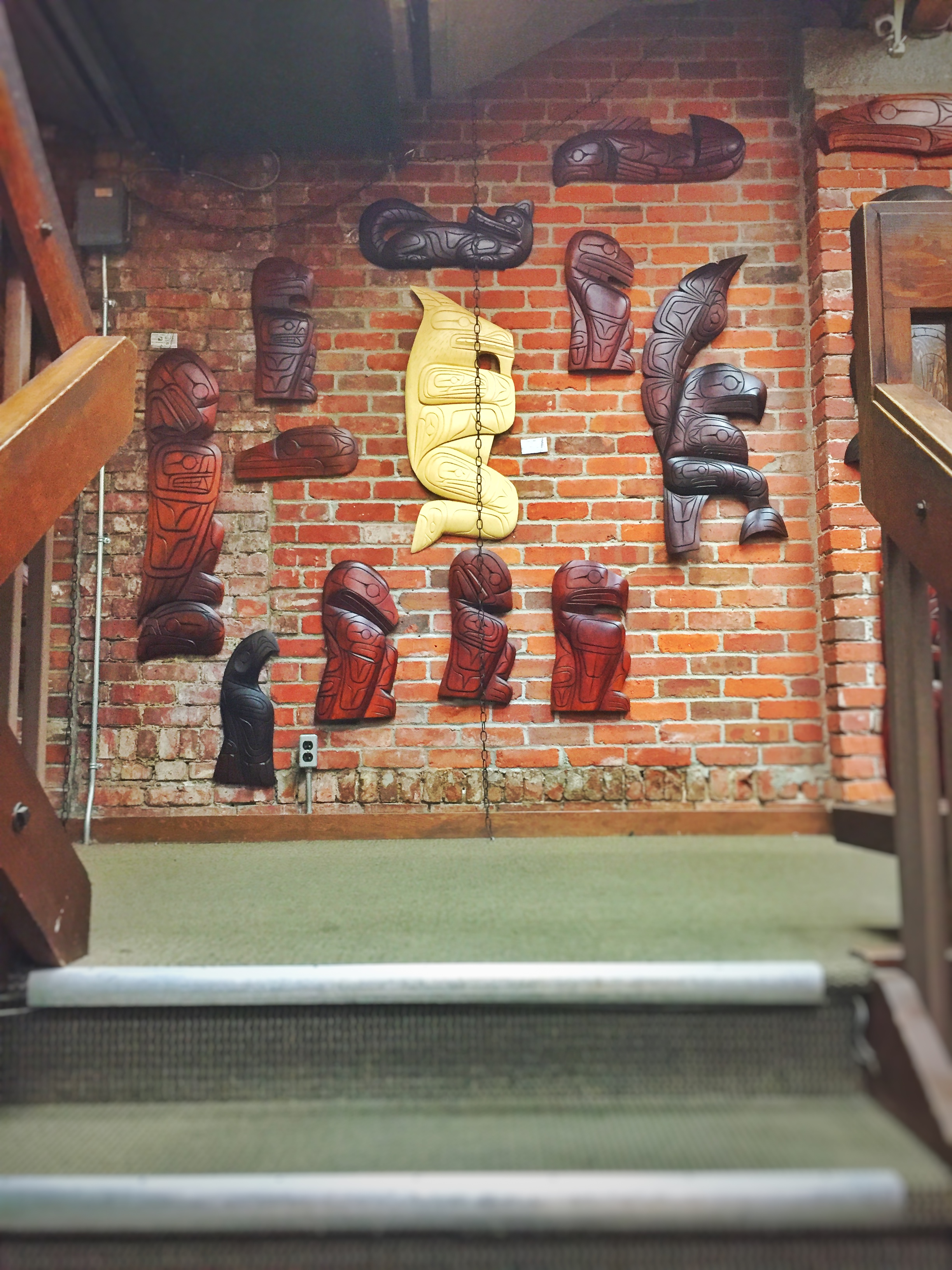
On Haida Gwaii — the archipelago located off the northern coast of British Columbia — cedar poles carved with stacked animal and human figures have stood as the most visible form of a complex cultural recording system. These structures, which can reach heights of twenty metres, are not monuments in any simple commemorative sense. They are documents, and reading them requires familiarity with a visual language developed over centuries by the Haida Nation.
What a Pole Records
Each totem pole is specific to a lineage. The Haida are organized into two primary moieties — Eagle and Raven — and each moiety contains numerous clans. A pole commissioned by a Raven clan to commemorate the death of a chief, for example, encodes information about that chief's lineage, the crests he was entitled to display, the territorial privileges transferred to heirs, and the events that defined his standing within the community.
The figures carved into the pole are not purely decorative representations of animals. They are crests — inherited privileges granted through specific historical events or supernatural encounters recorded in oral tradition. A killer whale, for instance, might mark a lineage's ancient claim to certain fishing territories. A thunderbird figure might reference an encounter that established a particular family's ceremonial rights. Without access to the oral narratives held by the lineage, the visual content of a pole cannot be fully interpreted.
Construction and Commission
The carving of a large totem pole was an extended social and economic undertaking. A chief commissioning a pole would engage a master carver — a specialist role held within particular lineages — and provide compensation appropriate to the scale of the work. The surrounding community participated in felling and transporting the cedar log, which could weigh several tonnes.
Red cedar (Thuja plicata) was the preferred material throughout the Northwest Coast. Its straight grain, resistance to rot, and workability with adzes and chisels made it suitable for both structural and detailed carving. Haida Gwaii's old-growth cedar forests, which produced trees of exceptional diameter, allowed for poles of a size rarely achieved on the mainland.
"The pole is the memory of the lineage given a physical form. You cannot read it without knowing the stories it holds."
Types of Poles
Several distinct pole types have been documented by ethnographers and recorded in Haida oral sources:
- Memorial poles — raised to commemorate a deceased chief, transferring crest privileges to successors
- House posts — structural supports carved with lineage figures, integral to the longhouse frame
- Mortuary poles — containing a box with the remains of a high-ranking individual
- Welcoming poles — positioned facing the sea to mark a chief's territory and receive guests
- Shame poles — a documented but less common form raised to publicly record a debt or slight left unresolved
Oral Tradition as Parallel Record
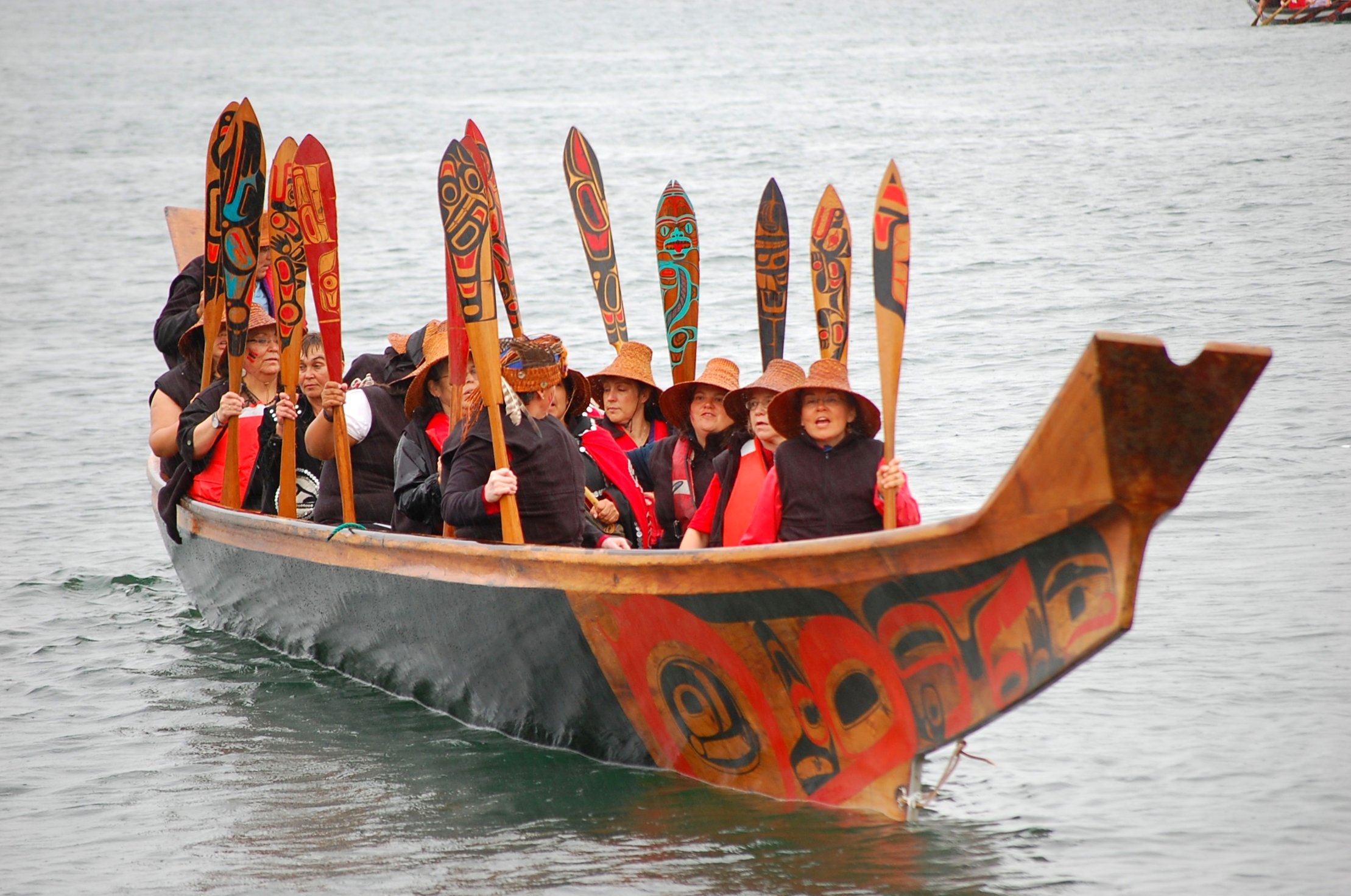
The Haida oral tradition — maintained by specialists within each lineage — functioned as the explanatory layer for all carved objects. The visual forms on poles, boxes, blankets, and canoes were shorthand references to narratives that required verbal transmission to be fully understood. This parallel system — visual and oral — created redundancy: if a physical object was lost, the story survived; if a lineage's storytelling continuity was interrupted, the physical objects could prompt reconstruction.
Recorded ethnographic accounts, beginning with work by anthropologist Franz Boas in the late nineteenth century and continued by scholars including Marius Barbeau and more recently by researchers working with the Haida Nation directly, have produced substantial documentation of these oral narratives. The Canadian Encyclopedia's entry on the Haida provides an accessible summary of current knowledge.
The Dispossession and Return of Poles
Beginning in the late nineteenth century, a combination of missionary activity, federal policy, and the collection practices of museums in Canada, the United States, and Europe removed hundreds of poles from Haida villages. The introduction of the Indian Act in 1876 and subsequent amendments created legal barriers to the potlatch system — the ceremonial framework within which poles were commissioned and raised. By the 1920s, many of the most significant poles from the villages of Skidegate and Masset had been transferred to institutional collections.
Repatriation negotiations between the Haida Nation and institutions including the Canadian Museum of History, the Royal British Columbia Museum, and the University of British Columbia Museum of Anthropology have proceeded in stages since the 1990s. Some poles have been returned; others remain subjects of ongoing discussion. The Crown-Indigenous Relations and Northern Affairs Canada website tracks current repatriation policy frameworks.
Documentation and Preservation
The Haida Gwaii Museum at Ḵay Llnagaay in Skidegate currently holds a significant collection of poles and other cultural objects, and works in partnership with Haida cultural specialists to maintain interpretive material grounded in Haida sources rather than solely in external ethnographic frameworks. New poles continue to be carved — a practice that has seen significant revival since the 1970s under master carvers including Bill Reid, whose work brought Haida formline art to international recognition.
Formline Art and Its Grammar
The visual system underlying Northwest Coast carving — formline — was formally analyzed and described by the artist and scholar Bill Holm in his 1965 study Northwest Coast Indian Art: An Analysis of Form. Holm identified consistent structural principles governing the use of primary and secondary formlines, ovoids, U-forms, and S-forms across the carving and painting traditions of Haida, Tlingit, Tsimshian, and related peoples. His analysis remains a standard reference for researchers working with Northwest Coast visual material.